Consumer AI / FamilyTech
Not an app for families. A personal assistant for mom.
Market research and positioning strategy for FamilyAI - a US-market AI product for mothers, built around mental-load relief rather than family coordination.
CASE / 13
FamilyAI
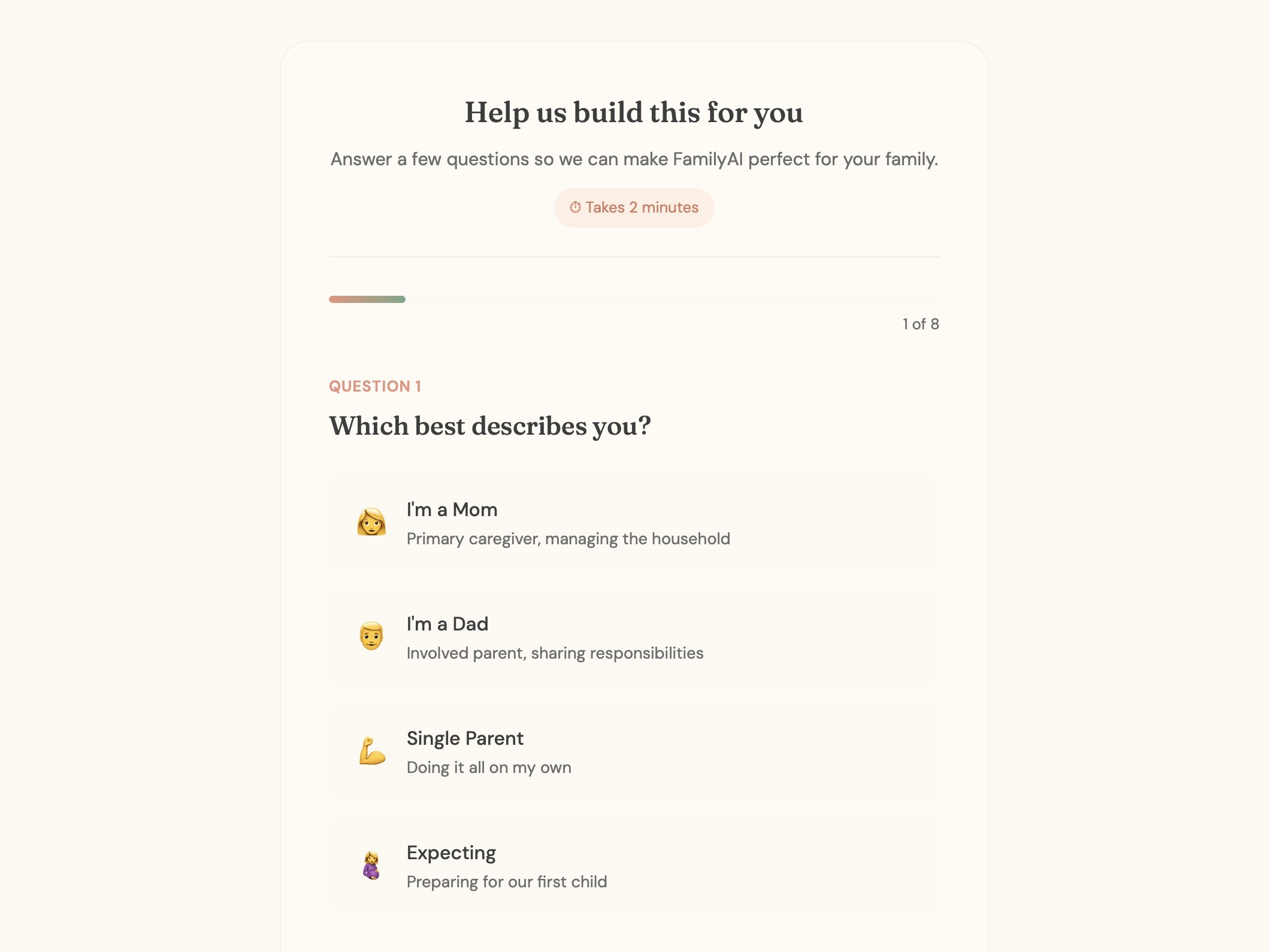
A US-market opportunity brief commissioned November 2025. The question on the table: where to position an AI product aimed at mothers, in a category where every direct competitor (PinwheelGPT, Chat Kids, Khanmigo) sells "safe AI for kids" and every indirect competitor (Cozi, Bark, ChatGPT) sells a tool. The client had built a product Blueprint with eight modules. The research asked whether the commercial story should be built around the family as a unit, or around the mother specifically.
GEO
United States
Setup
Market strategy + positioning
Duration
Research sprint
Shipped
Q4 2025
The market, sized honestly
The market, sized honestly
38 million mothers in the US. 23 million with iPhones. Working mothers make up 74% of the total. The top five states (California, Texas, Florida, New York, Illinois) account for 37% of the market, or roughly 14 million mothers reachable from a five-state launch.
The iPhone cut was decisive. iPhone-owning mothers spend roughly seven times more on apps than Android-owning mothers ($10.40 vs $1.40 monthly), convert to subscription at 10% vs 8%, and index 2.5x on expressed interest in AI tools. The recommendation was to launch iPhone-first and not treat Android as a phase-one market. Sources: U.S. Census 2024, Pew Research, RevenueCat 2024 state of subscriptions.
The real scarcity was not time. It was cognitive bandwidth.
The real scarcity was not time. It was cognitive bandwidth.
Across a Reddit and X thematic analysis of roughly 4,200 posts from US mothers, the most frequent theme was not work-life balance or childcare logistics. It was mental load: the unending executive-function work of holding schedules, appointments, supplies, emotional states, and coordination in a single head. 23% of analysed discussions touched on partner non-participation, 68% of those negatively toned.
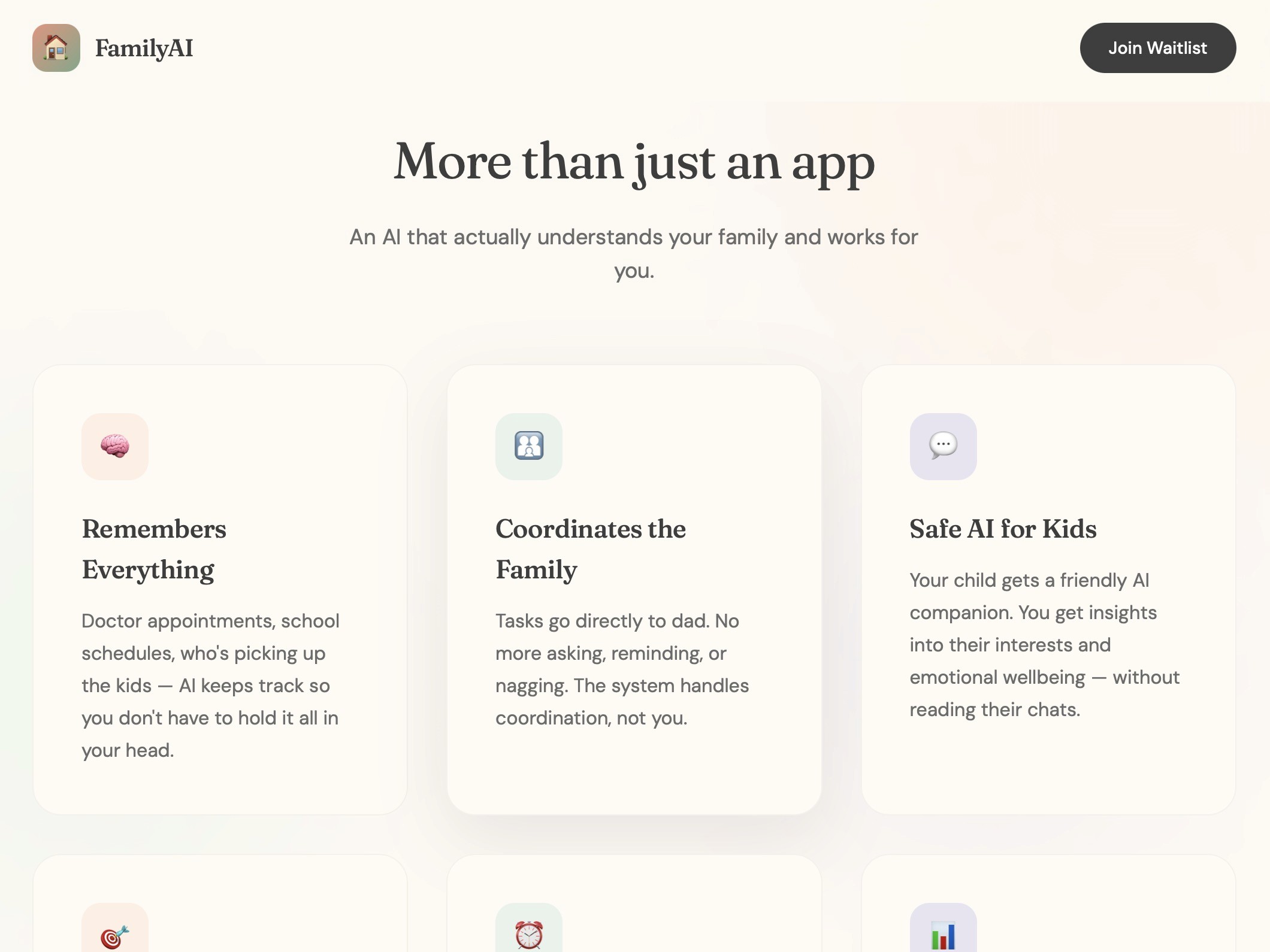
This was the positioning lever. A product framed as "organise your family" competes with Cozi and loses. A product framed as "offload the cognitive work that only you are doing" has no direct competitor.
The AI-trust question was already settled
The AI-trust question was already settled
71% of parents in our source data had tried ChatGPT. 52.7% had used it for parenting-adjacent questions. A 2024 University of Kansas study found parents rate ChatGPT content higher than clinician-authored content on parenting topics when they cannot tell the difference, and trust AI output more than medical professionals when both are visible. The trust barrier we expected to design around did not exist for this segment.
The competitive frame is therefore not "our AI vs ChatGPT". It is "which AI reaches the mother's hand at the moment of the question." That is a distribution and retention question, not a model-quality question.
Two positioning options, one recommendation
Two positioning options, one recommendation
Option A. Family assistant. Conservative, generic, easy to understand, competes directly with Cozi and FamCal. Saleable, hard to differentiate.
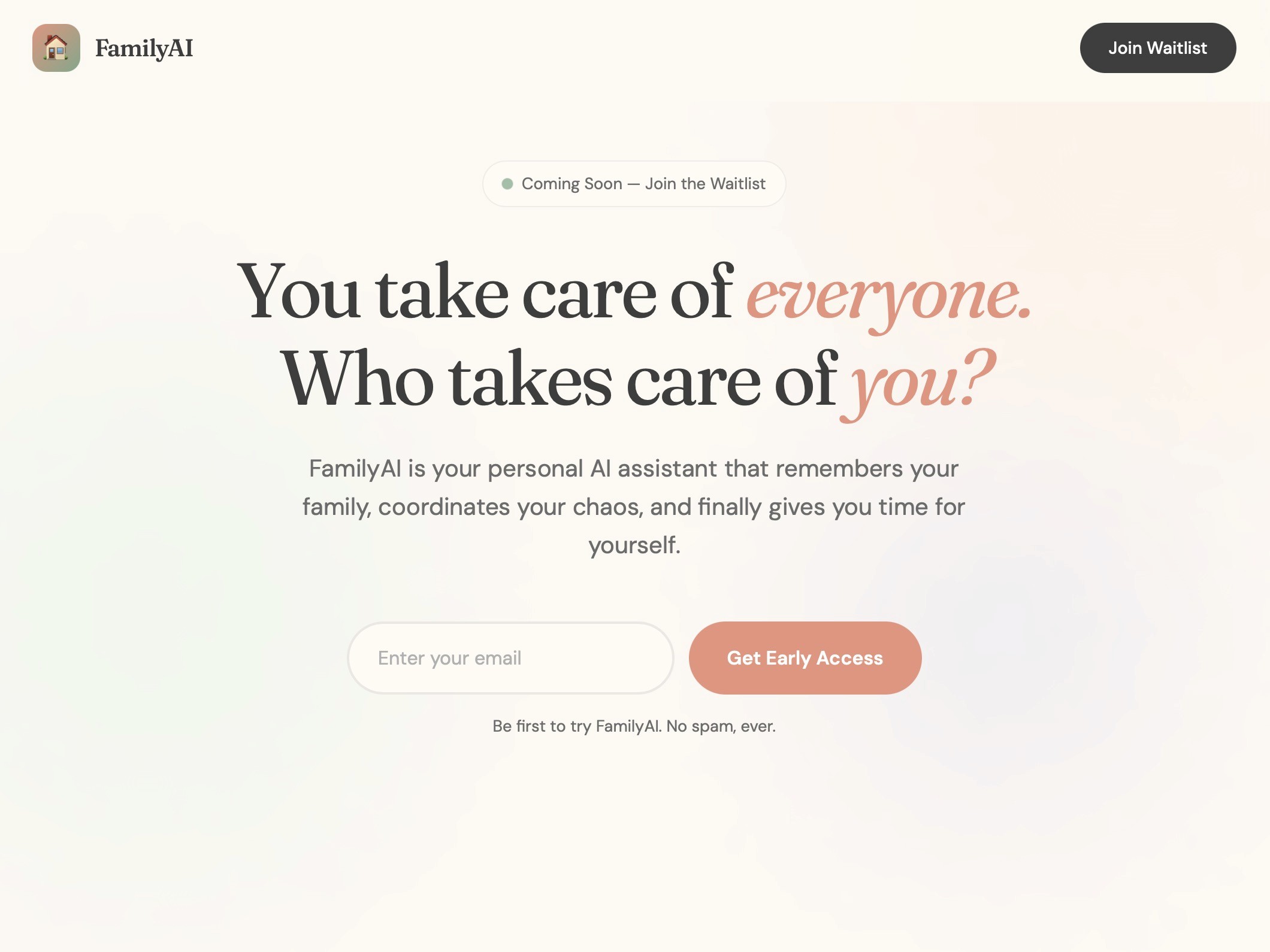
Option B. Personal assistant for mom. Narrower audience on paper, sharper emotional contract, no direct competitor in-category. Tagline: "You take care of everyone. Who takes care of you?"
We recommended Option B. The core reasoning was not preference but economics: CAC via paid acquisition on generic family-app positioning runs $50 to $80. LTV on a $9.99/month subscription with Apple's 30% cut yields roughly $7/month net, giving an 8 to 12-month payback against 8 to 10-month average subscription lifetime. Paid-acquisition-led growth does not work at that shape. Organic acquisition. Content, referrals, influencer. Can land CAC at $15 to $25, which does work. Option B gives organic content something non-generic to say. Option A does not.
Launch With Us