DTC / Outdoor Apparel
The studio stopped making ads. The AI did. We edited.
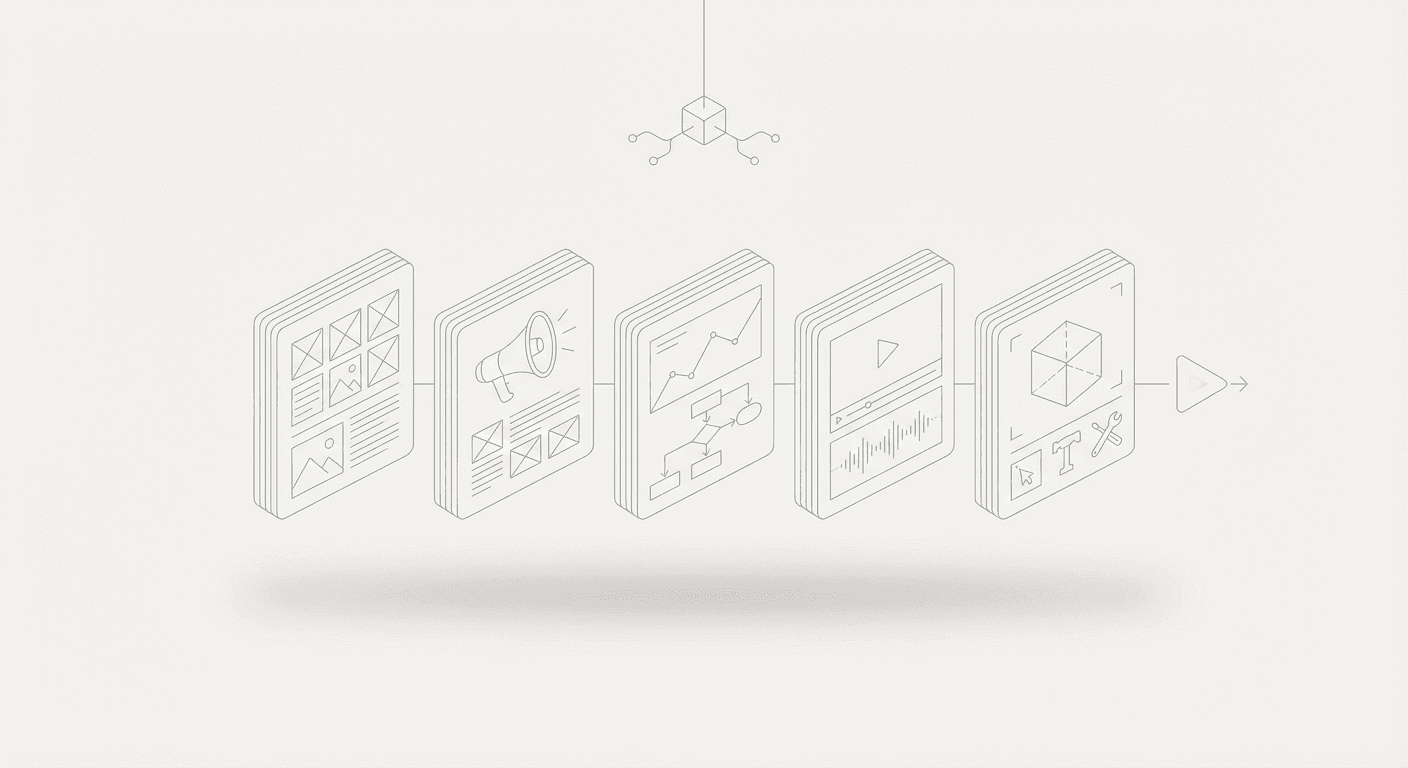
How a Nordic outerwear DTC brand ran 340 creative variants a month on a three-person team by rebuilding the production stack around generative tools and structured briefs.
CASE / 10
Nordic DTC brand
The brand had a creative studio of four designers, a media budget of €380k a month across Meta, TikTok, and YouTube, and a pipeline that could ship roughly 30 fresh creatives a month. Ad fatigue was showing up in CAC reports by week three of every campaign. The growth team kept asking for more variants. The studio kept saying no. Both were right.
GEO
Sweden · Denmark · Norway
Setup
Creative + growth squad
Duration
13 weeks
Shipped
Q1 2026
The constraint was briefs, not designers
The constraint was briefs, not designers
We shadowed the studio for a week. Actual time-per-creative was 40 minutes to two hours of design work, and four to six days of brief-clarification ping-pong, internal review, legal sign-off, and rework. Designers were spending 18% of their week designing and 72% of it clarifying, waiting, and revising. The AI angle was obvious in that environment: the bottleneck was not the pixels, it was the specification.
The first decision, and the one most resisted, was to stop letting growth write free-form briefs. We built a structured brief template in Linear: audience segment (pulled from the CDP), product SKU, stated hypothesis, mandatory format list, brand guardrails reference, legal constraints reference. A brief that did not populate every field could not be saved. The first two weeks of this hurt. By week four it was faster for everyone.
The generation layer
The generation layer
We wired three tools into the pipeline: Midjourney v7 for still-image compositions, Runway Gen-4 for short-form video, and a custom Claude-based brief-to-variant service that took the structured brief and produced 20 conceptual variants of copy, hook, and composition direction. The designers stopped generating from scratch. They reviewed, selected, composited, and finished. Brand-safety review ran on every asset before human review, catching obvious issues (misrepresented product features, regulatory flags on health claims) automatically.
The non-obvious win: the Claude service was also used for the rejection pass. An asset that failed any brand-guardrail rule was rejected with a written reason before it hit a designer's queue. This killed the "why didn't they follow the brief" review cycle that had been costing half a day per asset.
The funnel told us which variants lived
The funnel told us which variants lived
We instrumented segment-level funnel tracking (impression → click → PDP → add-to-cart → purchase) inside the warehouse, joined to each creative's brief metadata. Within four weeks we had a pattern nobody had articulated before: creatives that worked for the returning-customer segment had a fundamentally different funnel shape from new-customer creatives. Returning-customer creatives lost 40% fewer users between PDP and add-to-cart. New-customer creatives had stronger click-through but weaker downstream conversion. Previously, "winners" were picked on blended ROAS at the ad-set level and the distinction was hidden.
We rebuilt the creative review meeting around this. Every weekly meeting now reviewed winners by segment, not by platform. Brief allocation shifted to segment-match, with clearer language about who each brief was for.
What we did not automate
What we did not automate
Brand-voice decisions stayed with the studio lead. The tone guardrails were tight enough that generated copy stayed on-brand, but the strategic creative direction (quarterly themes, seasonal moods, product storytelling) was written by humans and fed to the system. We also kept product photography human. The generated imagery for abstract scenes performed well; it did not perform well as a substitute for actual product shots. The brand had a real product, shot on real people, in real Nordic weather, and the generative aesthetic could not replicate the trust the photography signalled on cold audiences.
Launch With Us